What merchandising means on a shop floor, how visual merchandising differs, and what a merchandiser actually does when they walk into a store.
6 min read7 steps6 checks
“
Merchandising is mostly about availability and accuracy. A beautiful display does little if the product behind it has sold out.The one thing to remember
Start
Start here
What merchandising is, store by store.
From what the word means to what a merchandiser does on each visit. Follow the line; tap any point to read it.
01Step 1 of 7
What merchandising means
Merchandising is the work of presenting products in a shop so that shoppers can find them, understand them and buy them.
Shelf position
Facings
Price labels
Promotions
Stock on shelf
It covers where a product sits on the shelf, how many facings it gets, whether the price label is right, whether the promotion is in place and, most basic of all, whether there is stock on the shelf at all.
The word is used in two different ways in UK retail.
In a fashion or department store head office, a merchandiser is a planning role: someone who forecasts sales, sets stock levels and decides how much of each line goes to each branch.
In grocery, convenience, DIY, health and beauty and electricals, a merchandiser is often a field role: a person who visits stores on behalf of a brand and makes sure its products are on the shelf as agreed.
This guide is about the second meaning, the in-store work, because that is the part a brand can hand to a team.
Key pointMerchandising is mostly about availability and accuracy. A beautiful display does little if the product behind it has sold out.
02Step 2 of 7
What is visual merchandising?
Visual merchandising is the craft of making products look appealing so that people stop, look and buy.
Window schemes
Mannequins
Feature tables
Lighting
Colour blocking
It is the part of retail you notice: window schemes, mannequins, feature tables, lighting, colour blocking and the way a store guides you from the entrance to the till.
Most retailers and brands have a visual merchandising team, in house or agency, who design the look and write the guidelines: photographs, layouts and instructions for each display.
Someone then has to put that look into hundreds of stores and keep it right as stock sells through. That installation and upkeep is store-level work, and it is where visual merchandising and everyday merchandising meet.
A simple way to separate them: visual merchandising asks "does this make people want it?", while merchandising asks "is it here, priced correctly and where it should be?" Most brands need both answered.
Key pointThe design of a display and the installation of it are different tasks, often done by different people.
03Step 3 of 7
What a merchandiser does on a store visit
A typical visit starts with signing in and a word with the store or department manager.
Sign in
Check the layout
Fill gaps
Rotate stock
Fix labels
Face up
Photos and report
A merchandiser who is known and polite to store staff gets far more done than one who appears unannounced in the aisle.
The core of the visit is the shelf. The merchandiser checks every line against the agreed layout, fills gaps from stock in the backroom where the store allows it, rotates stock so older dates sell first, corrects price and promotional labels, and faces products forward so the range looks full and tidy.
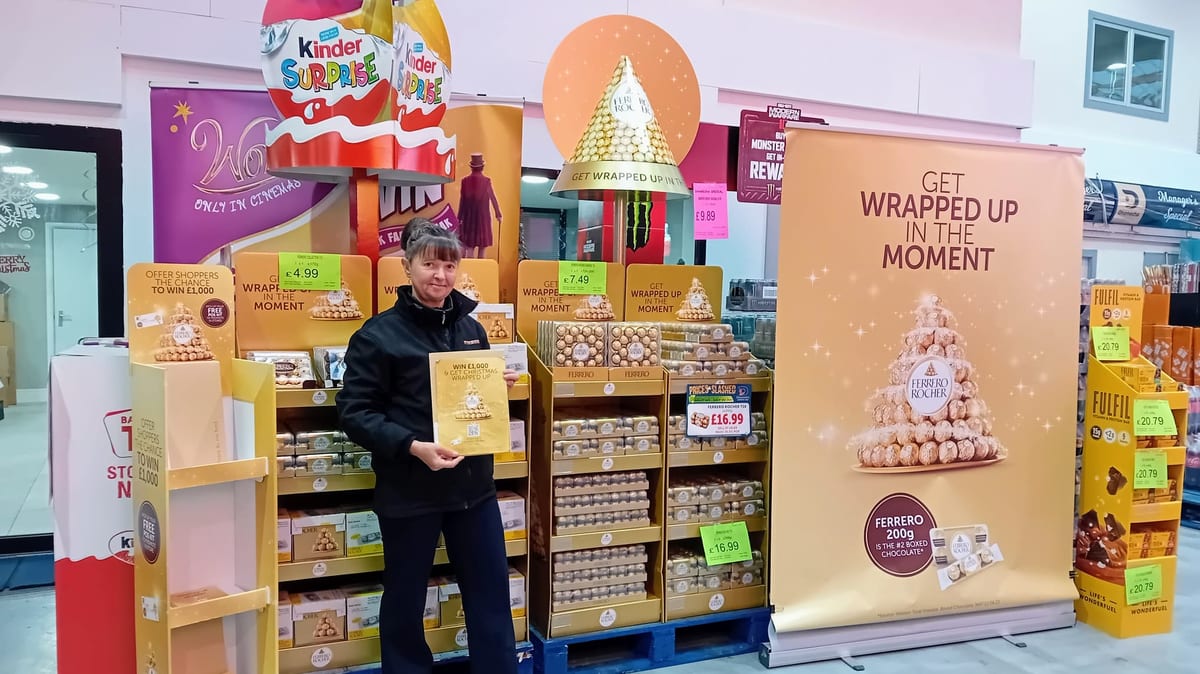
If the brand has a promotion running, the merchandiser puts up the point of sale, builds any display unit the brand has supplied and checks that the promotional price is showing at the till.
Before leaving, they take photos and complete a short report: what was found, what was fixed and what needs the brand's account team to raise with the retailer.
04Step 4 of 7
Planograms, compliance and shelf drift
A planogram is the diagram that shows exactly where each product goes on a shelf: which bay, which shelf, how many facings and in what order.
Bay
Shelf
Facings
Order
Brands and retailers agree planograms as part of a listing, and the retailer's own staff are expected to keep to them.
In practice, shelves drift. A busy store fills a gap with whatever is to hand, a new line squeezes an old one, or a reset happens without the brand's products being put back where they belong.
Over a few weeks, a shelf can look quite different from the plan, and sales suffer quietly because shoppers can't find what they came for.
Planogram merchandising puts shelves back to plan. Merchandising audits measure how far they have drifted in the first place, store by store, so the brand knows where to send people and what to raise with the retailer.
Key pointAsk for photos before and after every visit. They are the simplest proof that the shelf matches the plan.
05Step 5 of 7
Who books merchandising teams, and when
Brands without their own field team are the most common buyers, along with brands whose field team can't cover every store or every promotion.
New listing
Seasonal changeover
Category reset
National promotion
Regular visits
Agencies running retail programmes for a client book merchandisers too.
The peak moments are predictable. A new listing needs the product put on shelf correctly in every store at launch.
A seasonal changeover or category reset means moving whole ranges in a short window.
A national promotion needs point of sale and displays in place on the first day, not the third.
Between these peaks, regular visits keep availability and compliance where they should be.
06Step 6 of 7
Merchandising at events: the other meaning
Some people searching for an "event staff merchandiser" mean something else again: the staff who sell official merchandise at concerts, festivals, sports fixtures and touring shows.
Set up the stall
Sizes in order
Card and cash
Count in and out
That work is closer to retail sales than to shelf work.
Event merchandise staff set up the stall, keep sizes and lines in order as stock moves, take card and cash payments, answer questions in a noisy crowd and count stock in and out so the totals reconcile at the end of the night.
Speed at the counter during the rush before doors and after the final act matters more than anything else.
07Step 7 of 7
Planning a merchandising project
A good merchandising brief answers six questions: which stores, how often, what tasks on each visit, how long each visit should take, how store access is arranged with the retailer, and what the report should show.
6questions a good merchandising brief answers
Store access deserves attention early. Retailers have their own rules for third-party merchandisers, from sign-in procedures to times when visits aren't allowed, and the brand's account team often needs to arrange permission before the first visit.
Building visits around the store's quieter trading hours makes life easier for everyone.
Finally, agree what success looks like. Availability, planogram compliance and promotional compliance are the usual measures, and tracking them visit by visit shows whether the programme is working.
Key pointStore access is the most common cause of a slow start. Sort it before the first visit is booked.
Checklist
Before the first store visit.
0/6
Ready for store one.
At a glance
Five meanings, one word.
What each kind of merchandising covers, and who does it.
Short answers to the questions brands ask before booking merchandisers.
What is the difference between merchandising and visual merchandising?
Merchandising makes sure products are available, correctly placed and correctly priced. Visual merchandising designs how products and displays look so they draw shoppers in. A field team often installs the visual merchandising scheme as part of its merchandising visits.
Is a merchandiser the same as a sales rep?
Not as a rule. A sales rep negotiates orders and listings with the retailer; a merchandiser works on the shop floor to make sure what has been agreed actually happens. Some programmes combine the two roles.
Do merchandisers need permission to work in a store?
Yes. Retailers set their own rules for visiting merchandisers, and the brand normally arranges access through its account team. Merchandisers then sign in and follow store procedures on each visit.
How often should stores be visited?
It depends on how fast the product sells, how quickly shelves drift and whether a promotion is running. High-volume lines and launch weeks justify more frequent visits than steady, slower lines.
Can merchandisers build displays?
They can assemble and install display units and point of sale that the brand supplies, following its guidelines. Designing and producing the display itself is a separate task for the brand or its display supplier.
We supply merchandisers who visit stores to your brief: planogram resets, availability checks, promotional set-ups and audits, with photos and a report after each visit. You supply the planogram, point of sale and any display units; our team installs and maintains them to your guidelines.